Quantum vs Cinema: The Next Big Disruption Threatening India’s Film Industry
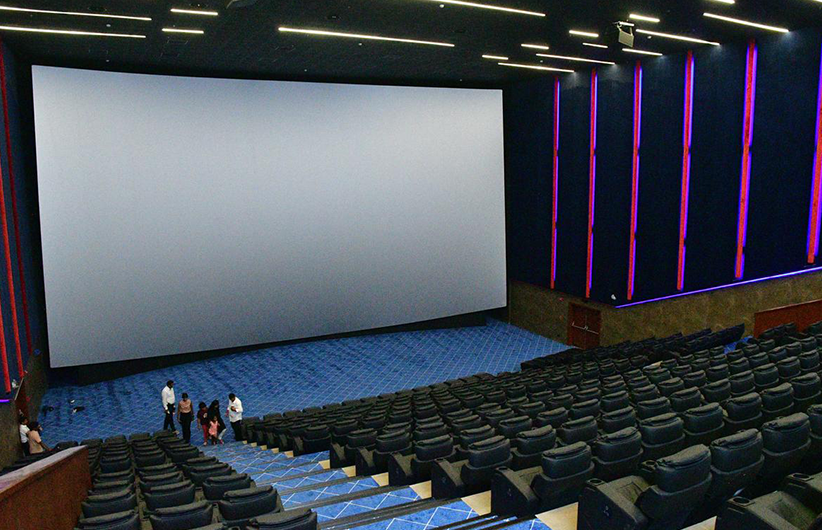
As the world prepares for quantum computing, India’s theatrical ecosystem may be heading toward a cybersecurity reckoning few are discussing.
For decades, the global film industry has worried about piracy in familiar forms — camcorders in theatres, torrent leaks, hacked streaming accounts, and illegal IPTV networks. But a far bigger disruption is quietly approaching, one that could fundamentally reshape how films are protected, distributed, and exhibited across the world.
The threat is quantum computing.
While still emerging, quantum technology is advancing rapidly enough to trigger serious concern across global cybersecurity circles. Governments, banks, cloud providers, telecom operators, and technology giants are already preparing for what experts call the “post-quantum” era — a future in which today’s encryption systems may no longer be secure.
Yet within cinema and broadcasting, particularly in India, the conversation remains limited.
That silence may not last much longer.
India today represents one of the world’s largest film economies, with thousands of digital screens, booming OTT consumption, expanding regional production hubs, and a highly networked distribution ecosystem. From Bollywood and South Indian blockbusters to live-event cinema and premium streaming releases, content security has become central to business survival.
The challenge is that much of the global theatrical infrastructure protecting that content was designed long before quantum computing became a serious reality.
And according to technology experts, the clock may already be ticking.
Why Quantum Computing Changes Everything
Quantum computing is often misunderstood as simply a faster version of today’s computers. In reality, it is a fundamentally different approach to computation.
Traditional computers process information sequentially, while quantum systems can evaluate enormous combinations of possibilities simultaneously using quantum mechanical principles. For certain problems — particularly cryptography — this creates unprecedented computing power.
That matters because modern digital security relies heavily on encryption systems built around mathematical complexity. The assumption has always been that solving these calculations would take conventional computers millions or billions of years.
Quantum computing could dramatically shorten that timeline.
This has enormous implications for every industry dependent on encrypted data — including banking, telecom, defence, cloud computing, e-commerce, and increasingly, media and entertainment.
Cinema is no exception.
How Digital Cinema Security Works Today
Modern theatrical distribution operates through highly sophisticated digital security systems that have successfully protected first-release films for more than two decades.
When a movie is distributed to cinemas, it travels as a Digital Cinema Package (DCP) — essentially a secure bundle containing the encrypted movie files.
These files are protected using AES encryption, one of the most trusted encryption standards in the world. However, the keys needed to unlock and play those files are delivered separately through a Key Delivery Message (KDM).
The KDM is tied specifically to an authorised projector or media server inside a cinema. In simple terms, it ensures that a film can only be played on approved equipment during approved dates and timings.
This architecture has become the backbone of global theatrical security.
It protects:
- Early-release theatrical windows
- Premium studio content
- Regional language releases
- Event cinema
- Pre-release anti-piracy workflows
The system has worked remarkably well.
But quantum computing threatens one critical component of that ecosystem — the asymmetric cryptography protecting KDMs
The “Harvest Now, Decrypt Later” Problem
One reason cybersecurity experts are increasingly alarmed is because the threat does not begin when powerful quantum computers arrive.
It begins now.
Across global cybersecurity discussions, one phrase is becoming increasingly important: “Harvest Now, Decrypt Later.”
The strategy is simple. Attackers can steal encrypted data today, store it for years, and decrypt it later once quantum capabilities mature.
For cinema, the implications are significant.
A stolen DCP today may remain inaccessible for years under current encryption systems. But if future quantum systems can break the cryptographic protections surrounding KDMs, archived copies of pristine theatrical content could eventually become readable.
That possibility changes the long-term security assumptions underpinning digital cinema distribution.
Importantly, this is not just a film industry concern.
Conventional cryptography secures:
- OTT platforms
- Financial systems
- Government networks
- Messaging services
- Cloud storage
- E-commerce platforms
- Cryptocurrencies
The difference is that many major technology companies have already started preparing for post-quantum migration.
Cinema largely has not.
Big Tech Is Already Moving
The global technology sector has recognised the urgency of quantum-era security far earlier than most entertainment sectors.
Major companies are already implementing post-quantum cryptography (PQC) frameworks across products and platforms.
Apple has introduced quantum-safe protections into its messaging ecosystem and operating systems.
Google has publicly discussed long-term plans for broad PQC adoption while investing heavily in quantum research.
Microsoft is integrating quantum-resilient security frameworks into enterprise systems and cloud environments.
Meta has also begun transitioning communication systems toward future-ready cryptographic standards.
Meanwhile, streaming giants are modernising digital rights management (DRM) infrastructure aggressively. Even device compatibility decisions increasingly reflect evolving security priorities.
This raises a difficult question for theatrical exhibition globally:
What happens if home entertainment ecosystems eventually become more secure than cinemas?
For studios and distributors, that question carries enormous strategic implications.
Why India Should Pay Attention
India’s film industry may face a particularly complex challenge because of the sheer scale and diversity of its exhibition ecosystem.
The country operates one of the world’s largest digital cinema networks, ranging from premium multiplex chains to independently operated single screens across smaller towns and regional markets.
Over the past 15 years, India rapidly digitised theatrical exhibition, enabling:
- Faster nationwide releases
- Regional language expansion
- Satellite-based delivery
- Day-and-date distribution
- Improved anti-piracy control
- Wider content accessibility
But much of that infrastructure now faces aging hardware cycles.
A transition toward post-quantum security may require:
- New media blocks
- Secure firmware upgrades
- Updated projector certifications
- New key management systems
- Software architecture redesign
- Enhanced compliance testing
For large multiplex operators, such transitions may be manageable over time.
For smaller exhibitors already operating under financial pressure, the challenge could be far more difficult.
And unlike the earlier transition from film to digital projection, there may be no immediate cost savings to offset the investment.
The Financial Burden of a Quantum Upgrade
The film industry has already experienced one massive technology transition — the move from film prints to digital cinema.
That shift was supported globally through financing mechanisms such as the Virtual Print Fee (VPF), where studios helped subsidise projector deployments because digital distribution significantly reduced print and logistics costs.
The post-quantum transition is different.
There are no obvious operational savings.
Instead, the industry faces a pure security investment cycle.
That means:
- Studios may need new distribution infrastructure
- Equipment manufacturers will require redesign and certification
- Integrators will face deployment costs
- Exhibitors may need hardware upgrades without direct revenue upside
In India, where exhibition economics remain highly sensitive, particularly outside metro markets, this could create uneven adoption timelines.
The risk is that portions of the exhibition ecosystem may lag behind global security standards.
Could Theatrical Exclusivity Be at Risk?
At the heart of this issue lies one critical business reality: theatrical exclusivity depends on trust.
Studios release high-value films into cinemas first because theatres are considered secure environments for premium content.
If that perception weakens over time, release strategies could evolve dramatically.
Technology experts increasingly believe that future consumer devices — smart TVs, streaming boxes, and advanced DRM ecosystems — may eventually become more quantum-secure than legacy cinema infrastructure unless exhibition upgrades happen proactively.
That creates a long-term strategic threat for theatres.
If distributors lose confidence in theatrical security, simultaneous or accelerated home releases could become more attractive commercially.
For India’s exhibition sector, still recovering from pandemic-era disruption and ongoing OTT competition, that possibility carries significant consequences.
The Missing Conversation in Indian Cinema
One of the striking realities surrounding quantum security is how little discussion currently exists within mainstream Indian media and entertainment circles.
Conversations around AI, virtual production, immersive cinema, and streaming disruption dominate industry forums today.
Quantum cybersecurity rarely enters the conversation.
Yet globally, cybersecurity agencies and standards bodies are already preparing migration frameworks for post-quantum systems.
The US National Institute of Standards and Technology (NIST) has formally begun standardising PQC algorithms intended to replace vulnerable classical encryption methods over time.
Eventually, global entertainment supply chains may also need to align with these standards.
The challenge is that cinema transitions move slowly.
The original rollout of global digital cinema standards took over a decade from specification development to large-scale deployment.
A post-quantum migration may require similar coordination among:
- Studios
- Equipment manufacturers
- Integrators
- Exhibitors
- Security vendors
- Standards organisations
Which means the industry cannot realistically wait until quantum computers fully arrive before beginning preparation.
The Road Ahead
None of this means cinema security is about to collapse tomorrow.
Powerful fault-tolerant quantum computers capable of breaking large-scale encryption systems are still believed to be years away.
But the broader industry transition required to prepare for that future could itself take a decade or longer.
That is why cybersecurity experts increasingly argue that preparation must begin now.
For India, the stakes are especially high.
The country is not only a massive theatrical market but also a growing global production and streaming hub. As Indian studios expand international collaborations and premium content distribution, long-term security standards will become increasingly important.
The next major disruption facing cinema may not arrive through changing audience behaviour, AI-generated content, or streaming wars.
It may arrive through mathematics.
And unlike previous industry disruptions, this one could reshape the very foundation of how films are protected, distributed, and monetised in the digital age.
The global technology industry has already started preparing for the quantum era.
The question now is whether cinema — particularly in fast-growing markets like India — is prepared to move quickly enough before the future catches up.