India’s Content Business: Inside the Equity Deals Reshaping Entertainment Studios
India’s
content production houses are rapidly shifting from creator-led banners to
capital-backed studios as rising costs and OTT economics reshape the market.
Landmark equity deals involving Excel Entertainment, Dharma Productions and
global investors signal a new, more corporate phase for the Indian
entertainment business.
The Indian content
industry has entered a decisive new phase—one where creativity is no longer the
only currency that matters. Capital structure, strategic alignment and
long-term monetisation of intellectual property (IP) are now central to how
production houses are valued, scaled and sustained. This transition has been
underscored by two of the most significant equity transactions in recent years:
Universal Music Group’s Rs 800 crore minority investment in Excel Entertainment
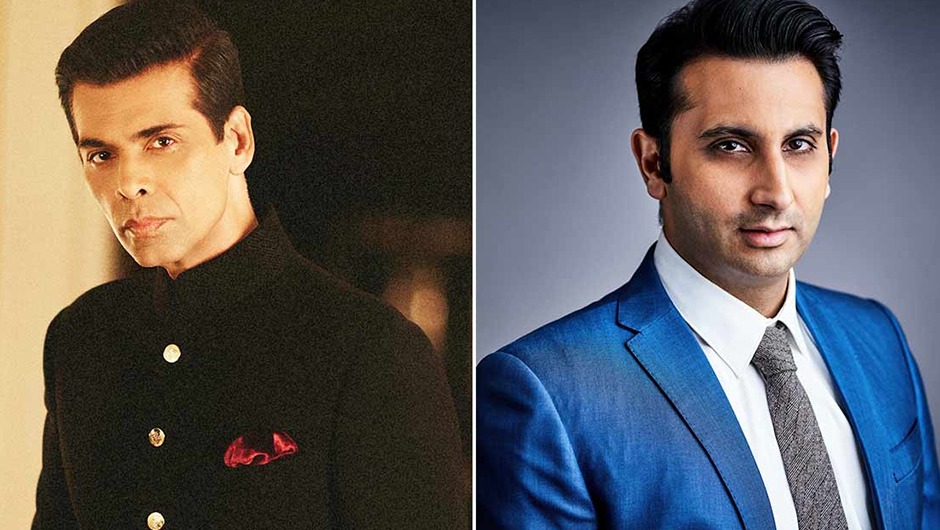
and Adar Poonawalla-led Serene Productions’ Rs 1,000 crore acquisition of 50%
stake in Dharma Productions.
While the two
deals have often been compared for their headline values, they are
fundamentally different in intent, structure and long-term implications.
Together, however, they offer a clear lens into how India’s content market is
evolving—from founder-led creative boutiques into structured, investment-ready
studios adopting a distinctly Hollywood-style business playbook.
A Market at an
Inflection Point
Rising production
costs, unpredictable theatrical revenues and a maturing OTT ecosystem have
forced Indian production houses to rethink their business models. The era of
financing films on a project-by-project basis is steadily giving way to
slate-based planning, IP ownership strategies and balance-sheet-driven growth.
OTT platforms,
once aggressive buyers of content at premium valuations, have turned more
selective and cost-conscious. Theatrical success has become harder to predict,
even for marquee banners. Against this backdrop, equity capital has emerged as
a strategic necessity rather than a distress response.
The Excel–UMG and
Dharma–Serene deals exemplify two distinct paths to the same objective: scale
with sustainability.
Excel
Entertainment–Universal Music Group: Strategic Minority, Global Synergy
Universal Music
Group’s acquisition of a 30% minority stake in Excel Entertainment for
approximately Rs 800 crore represents the largest minority investment in an
Indian production house to date. Valued at roughly Rs 2,700 crore, Excel chose
to retain majority ownership with founders Farhan Akhtar and Ritesh Sidhwani,
signalling confidence in its existing business fundamentals.
What makes this
deal structurally different is the nature of the investor. Universal Music
Group is not a financial backer or a passive shareholder—it is one of the
world’s largest entertainment companies, deeply embedded in music publishing,
global distribution and artist management.
The partnership is
strategically aligned rather than capital-driven alone. Under the agreement,
UMG gains global distribution rights for Excel’s future original soundtracks,
the two companies will launch a dedicated Excel music label, and Universal
Music Publishing Group becomes Excel’s exclusive publishing partner.
For Excel, this is
not about shoring up finances or expanding horizontally. It is about deepening
monetisation of content IP, especially music—an asset class that increasingly
delivers long-tail revenue across streaming, social platforms and international
markets.
Crucially, Farhan
Akhtar and Ritesh Sidhwani retain full creative and operational control,
insulating decision-making from short-term commercial pressure while benefiting
from UMG’s global infrastructure.
Dharma
Productions–Serene Productions: Capital-Led Scale-Up
In contrast,
Dharma Productions’ Rs 1,000 crore deal with Serene Productions was explicitly
capital-led. By selling 50% of the company, Karan Johar opted for an
equal-ownership structure that brought in substantial funds to accelerate
transformation from a boutique production house into a multi-vertical content
studio.
Unlike Universal,
Serene Productions had no prior operating history in entertainment. Backed by
Adar Poonawalla, its value proposition lies in financial strength and long-term
investment capacity rather than industry synergies.
Johar has been
clear that the deal was driven by growth ambitions, not recovery. However,
post-deal accountability has altered creative calculus. With an equal partner,
profitability has become non-negotiable—a shift Johar himself has acknowledged
publicly.
This has direct
implications for content risk-taking. Films like Homebound, while
critically acclaimed, may become harder to justify in a post-equity environment
where capital efficiency and return metrics carry greater weight.
Yet the upside is
evident. Since the deal, Dharma has aggressively expanded its
ecosystem—launching a distribution arm, fully acquiring its talent management
business (now Dharma Collab Artists Agency), strengthening Dharmatic for OTT,
expanding ad film production under Dharma 2.0, and laying the groundwork for a
music label.
Dharma’s model
reflects institutionalisation through capital, rather than strategic
convergence.
Saregama and
Bhansali: Music Capital Meets Prestige Cinema
The Rs 325 crore
investment by Saregama India into Bhansali Productions further reinforces how
content IP is being financialised. Structured through compulsory convertible
preference shares (CCPS), the deal allows Saregama to progressively increase
its stake, with a roadmap to majority ownership by 2030.
This is a classic
example of content-plus-music integration, where a music label secures premium
soundtrack rights from one of India’s most visually and musically distinctive
filmmakers. For Bhansali Productions, the deal brings institutional capital
without immediate dilution of creative control.
Importantly, this
transaction underscores how listed media companies are increasingly using
regulated, transparent investment structures to enter film production—adding
credibility and governance to the sector.
New Capital,
New Studios: The Birla Studios Signal
Beyond
acquisitions, greenfield studio launches are also reshaping the market.
Entrepreneur Ananya Birla’s launch of Birla Studios reflects a new generation
of capital entering filmmaking with a long-term, portfolio-driven mindset.
Birla Studios’ focus
on culturally rooted yet commercially viable cinema across Hindi and regional
languages signals confidence in content as a scalable business, not just a
creative pursuit. Unlike legacy banners evolving under pressure, these new
entrants are being built studio-first, with governance, diversification and
sustainability embedded from inception.
What These Deals
Tell Us About the Indian Content Market
Taken together,
these transactions reveal a clear pattern:
-
Capital is no longer episodic; it is
strategic and long-term
- Minority vs majority stakes reflect
different philosophies of growth and control
- Entertainment-native investors bring
synergy; financial investors bring scale
- Music IP has emerged as a central
monetisation lever
- Studios are being valued as IP
platforms, not film factories
India is not
replicating Hollywood’s studio system wholesale, but it is selectively adopting
its most resilient features—slate financing, IP ownership, cross-platform
monetisation and institutional governance.
The Road Ahead
As more production
houses weigh equity partnerships, the industry will likely see sharper
differentiation. Some studios will prioritise creative independence with
strategic minority partners, while others will trade ownership for rapid scale
and infrastructure.
What is clear is
that the Indian content market has crossed a threshold. The conversation is no
longer about individual films, star power or opening weekends. It is about
enterprise value, IP longevity and global competitiveness.
In that sense, the
Excel–UMG and Dharma–Serene deals are not rivals—they are complementary case
studies in how Indian entertainment is learning to think like a business,
without losing sight of storytelling as its core asset.